What is molecular gastronomy?
It is the scientific discipline that studies the physical and chemical processes that occur while cooking.
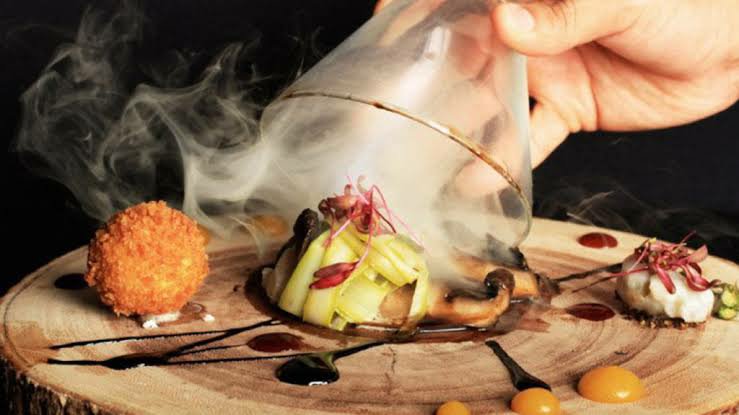
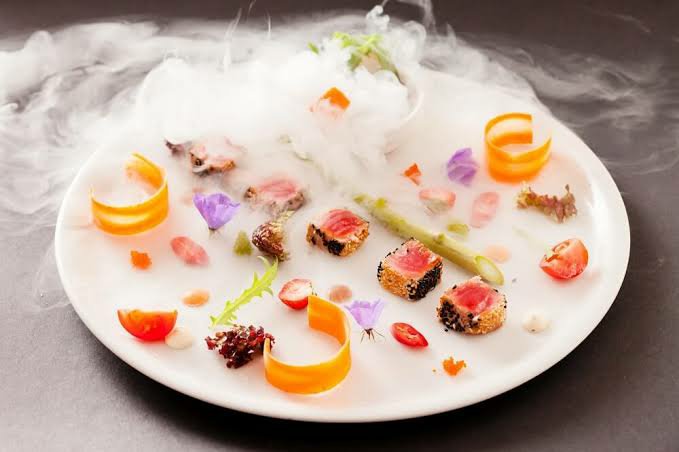
Today the term is very often connected with chefs wielding liquid nitrogen, pipettes, edible gels, blowtorches and other equipment usually used in a laboratory.
Molecular gastronomy also studies heat conduction, convection and transfer, physical aspects of food/liquid interaction, stability of flavor, solubility problems, dispersion, and texture/flavor relationship.
Some examples of molecular gastronomy foods are a miniature apple that is made to taste like meat, cocktails in ice spheres, fake caviar made of olive oil, transparent raviolis, spaghetti made from vegetables, instant ice cream and many others.
Who coined this term?
The scientific discipline—which was introduced under the name molecular and physical gastronomy and later shortened to molecular gastronomy—was established in 1988 by Hervé This, a physical chemist, and Nicholas Kurti, a former professor of physics at the University of Oxford, who were interested in the science behind the phenomena that occur during culinary processes.
 foodology